Water Chemistry for Dry Irish Stout: Balancing High Carbonate
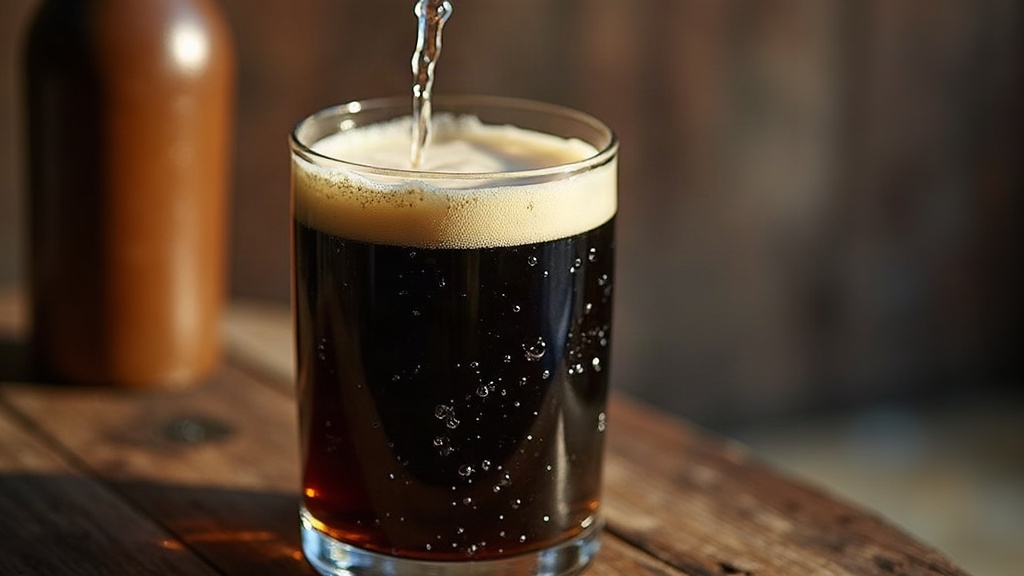
Brewing a proper dry Irish stout comes down to one relationship: how your water’s carbonate level plays against those dark roasted malts. Get that wrong and you’ll taste it immediately. Here’s the twist though. In most beer styles, high calcium carbonate is treated like a defect, something you fix before it ruins your batch. Dublin’s naturally hard water flips that logic entirely. It’s actually the reason Guinness-style stouts taste the way they do. Once you understand why, you can rebuild that same balance no matter where your tap water comes from.
Why Irish Stout Water Is Different
Standard water chemistry advice says strip out carbonate (bicarbonate) because it drives mash pH up and flattens hop character. Dry Irish stouts don’t play by that rule. Dublin’s tap water has historically run high in alkalinity, often 200-300 ppm as calcium carbonate, which on a pale beer would send mash pH way past where you want it.
Here’s the trick: dark roasted malts, roasted barley especially, are naturally acidic. The roasting process creates melanoidins and acidic compounds that pull mash pH down, sometimes dramatically. In a dry stout grist (usually 5-10% roasted barley alongside flaked barley and pale malt), that acidity cancels out the water’s alkalinity almost like it was designed to.
The Core Balancing Principle
The goal is matching residual alkalinity (RA) against how much acidifying punch your grist brings to the table:
- High carbonate water + dark, acidic malts = balanced mash pH (5.2-5.6)
- Low carbonate water + dark malts = mash pH too low, harsh sourness
- High carbonate water + pale malts = mash pH too high, muddy flavors
This explains a common brewing mistake: use soft water (the kind you’d reach for on a pale ale) for a dry stout and you’ll often end up with something thin, sharp, and unpleasantly sour. The roasted grains simply have nothing left to push against.
Step-by-Step Water Adjustment
1. Start With Your Base Water Profile
Test your water yourself or grab a report from your local utility. You need numbers for calcium, bicarbonate, sulfate, and chloride before you touch anything.
2. Target a Dublin-Style Profile
A classic dry stout profile lands somewhere around:
- Calcium: 100-120 ppm
- Bicarbonate: 200-250 ppm
- Sulfate: 50-60 ppm
- Chloride: 40-50 ppm
- Sulfate-to-chloride ratio near 1:1 (balanced, not hop-forward)
3. Add Calcium Carbonate or Baking Soda Carefully
If your source water is naturally soft, you’ll need to bump up alkalinity somehow:
- Calcium carbonate (chalk) barely dissolves without CO2 injection, which is annoying to deal with at home. Most brewers reach for baking soda (sodium bicarbonate) instead, dosed small (0.5-1g per gallon), to raise bicarbonate.
- Or blend in pickling lime (calcium hydroxide) in tiny amounts (0.1-0.2g per gallon). It gives a cleaner alkalinity boost without loading up the beer with sodium.
4. Increase Roasted Barley Proportion to Compensate
Can’t easily raise alkalinity? Lean on the grist instead. Bumping roasted barley from 5% up to 8-10% adds enough natural acidity to bring mash pH down on its own, even if your water stays on the softer side.
5. Measure Mash pH Directly
Don’t guess this part. Pull a cooled mash sample and check it with a calibrated pH meter. You’re aiming for 5.3-5.5 at room temperature. That range keeps your enzymes active while still letting the coffee-like roast character come through without turning astringent.
Common Mistakes to Avoid
- Over-softening water with RO or distilled water before adding dark malts. Do this and you’ll end up with a beer that’s painfully sour and thin, not “dry” in any pleasant sense.
- Ignoring the sulfate-to-chloride ratio. It shapes perceived dryness and malt roundness, and that’s exactly what gives dry stout its name.
- Skipping pH measurement and trusting a calculator alone. Calculators can’t account for the real-world variability of your actual malt.
Practical Example
Say you’re brewing a 5-gallon batch with soft source water, around 50 ppm bicarbonate. Adding 1/4 teaspoon of baking soda plus 1/2 teaspoon of gypsum usually gets alkalinity and sulfate into the right zone, particularly if you’re running 8% roasted barley in the grist.
Conclusion
High calcium carbonate meeting dark roasted malt isn’t a flaw waiting to be corrected. It’s the exact relationship that gives dry Irish stout its identity. Match your water’s alkalinity to the acidity your grist naturally provides, check mash pH directly instead of trusting theory, and nudge your minerals in small steps rather than big swings. Do that and you can brew a stout with the same smooth, roasty balance you’d find in a classic pint of Guinness, regardless of what’s coming out of your tap.