How to Clear a Stubborn Pectin Haze in Peach Melomel Mead
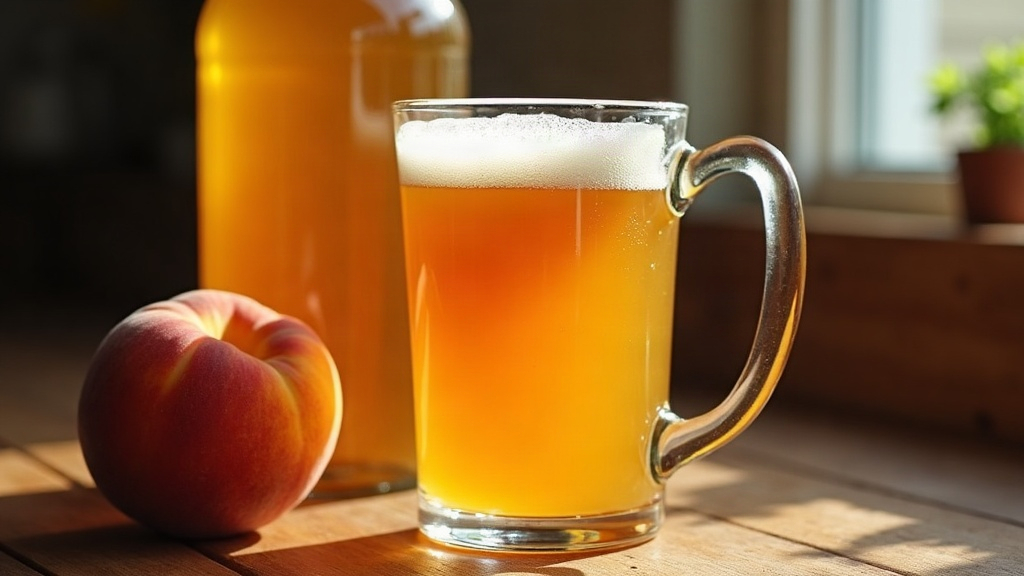
If your peach melomel finished fermenting but still looks like cloudy orange juice rather than the jewel-toned wine you were hoping for, you’re almost certainly dealing with a pectin haze. It’s one of the most common headaches in fruit meads. The good news: it’s fixable with the right enzyme treatment and a bit of patience, usually one to three weeks. Here’s why it happens and how to clear it for good.
Why Peaches Cause Pectin Haze
Peaches, like most stone fruits, carry a lot of natural pectin, the same stuff that makes jam set up in the jar. When you toss peach puree, pulp, or juice into your must, those pectin molecules spread out through the liquid. Fermentation doesn’t touch them. Yeast has zero effect on pectin. So even after a clean, complete primary, those pectin chains stay suspended, scattering light and giving you that stubborn, milky look that ordinary sediment-clearing just won’t fix.
You’re probably dealing with pectin (not yeast or protein haze) if:
- The haze has a slight shimmer or “lens flare” effect when you shine a light through the glass
- Racking, cold crashing, and waiting it out haven’t made a dent
- You used fresh, pureed, or frozen-then-thawed peaches rather than pasteurized juice alone
- Bentonite or basic fining agents on their own did nothing
Step-by-Step: Clearing Pectin Haze After Primary
1. Confirm It’s Actually Pectin
Before you add anything, run a quick alcohol test:
- Pull a small sample, about 2 oz, of your mead
- Mix 3 parts denatured alcohol or high-proof neutral spirit (Everclear works) with 1 part mead
- Let it sit for a few minutes
If stringy, snot-like clumps form, that’s your confirmation: pectin is the culprit.
2. Add Pectic Enzyme (Pectinase)
This is the real fix, the one thing that actually works:
- Use a liquid or powdered pectic enzyme made specifically for winemaking (skip the all-purpose jam-making kind, it’s not strong enough)
- Dose per the label, typically ½ to 1 tsp per gallon for liquid concentrates
- Add it straight to the melomel; no need to rack first
- Stir gently so you don’t stir in a bunch of oxygen
3. Control Temperature
Pectic enzyme works fastest in the 68–75°F (20–24°C) range. If your mead’s been sitting in a cold cellar, bring it up to room temp for the treatment, then cold crash once it’s clear.
4. Wait, Don’t Rush It
Give the enzyme 5 to 14 days to chew through the pectin chains. Check progress every couple of days with a flashlight behind the carboy. You’ll see the haze shift from a smooth milky cloud to a looser, more granular cloudiness right before it drops clear.
5. Follow Up With Fining Agents (If Needed)
Once the pectin’s broken down, any fine particles still floating around can be cleared with:
- Bentonite, good for general haze and protein
- Sparkolloid, works well on fruit meads, especially in cooler temps
- Chitosan + kieselsol combo, fast, often clears mead within 48 hours once pectin is out of the way
6. Cold Crash and Rack
After fining, cold crash at 32–40°F (0–4°C) for 5 to 7 days to compact the sediment, then carefully rack off the lees into a clean vessel.
Common Mistakes to Avoid
- Only adding pectic enzyme during primary. If you treated early but added more fresh fruit later (say, a secondary fruit addition of 2 lbs of peaches), you’ve introduced new pectin that needs its own round of treatment.
- Using pasteurized or cooked fruit without enzyme. Heat actually sets pectin, making it harder to break down afterward. Enzyme treatment isn’t optional here, it’s essential.
- Giving up too soon. Pectin breakdown is a chemical process, not a mechanical one. Fining agents and cold crashing can’t do what enzyme does.
- Overdosing the enzyme. More isn’t better. Stick to label dosing or you risk off-flavors.
When to Worry It’s Not Pectin
Ran the alcohol test and got no stringy clumps? Your haze might be something else:
- Starch (from honey additives or spices)
- Protein instability
- Incomplete fermentation (pull out the hydrometer and check gravity to make sure it’s actually done)
In any of these cases, pectic enzyme won’t do a thing. You’ll want bentonite, protein-specific fining, or a gravity check to confirm fermentation has truly stopped.
Conclusion
A stubborn pectin haze in peach melomel is annoying, but it’s one of the most treatable problems you’ll run into. Confirm it with the alcohol test, dose a wine-grade pectic enzyme, keep the mead warm while it works, and give it a week or two before you expect results. Follow up with standard fining and a cold crash, and you’ll go from cloudy peach juice to a brilliant, golden melomel ready for the bottle.