Lacto-Fermented White Asparagus with Tarragon & Pink Pepper
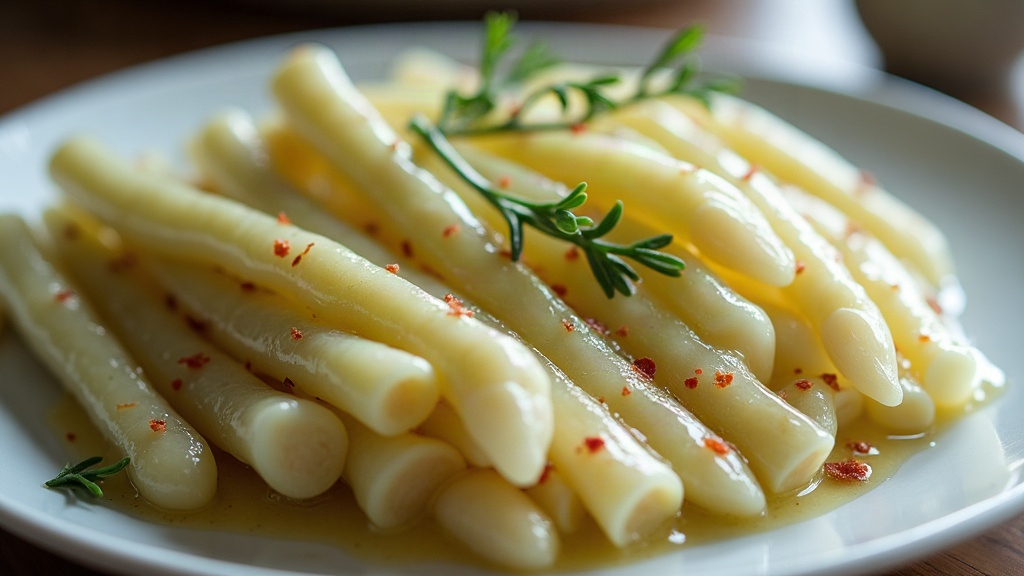
Lacto-fermenting white asparagus spears with tarragon and pink peppercorns takes a delicate spring vegetable and turns it into something tangy, aromatic, and loaded with probiotics, exactly the kind of thing that makes a charcuterie board memorable. The natural fermentation softens the spears just enough while keeping that satisfying snap intact, and the anise-tinged tarragon paired with fruity pink peppercorns gives you a flavor combo that plays beautifully off cured meats, soft cheeses, and a good crusty loaf.
Why White Asparagus Works So Well for Fermentation
Grown underground, shielded from sunlight, white asparagus ends up milder, sweeter, and a touch more mineral-forward than its green cousin. It also has denser, firmer fiber, which matters a lot here: that structure holds up during fermentation instead of collapsing into mush. If you’ve ever bitten into a fermented green asparagus spear and found it disappointingly limp, you’ll understand why white is the better pick when you want something crisp and refined for entertaining.
What You’ll Need
Ingredients:
- 1 lb (450g) fresh white asparagus, trimmed to fit your jar
- 2-3 sprigs fresh tarragon
- 1 tablespoon whole pink peppercorns
- 2 cloves garlic, smashed
- 1 quart (1 liter) filtered, non-chlorinated water
- 2 tablespoons non-iodized sea salt (about 5% brine)
- Optional: 1 bay leaf, a few coriander seeds
Equipment:
- A wide-mouth quart jar or fermentation crock
- A fermentation weight or a small glass/ceramic weight
- An airlock lid or a loose-fitting lid (burped daily)
Step-by-Step Fermentation Process
1. Prepare the Asparagus
Rinse the spears well and snap or cut off the woody ends. If the lower third feels stringy or fibrous, which happens often with white asparagus, peel it with a vegetable peeler. Trim each spear so it sits about an inch below the jar’s rim.
2. Make the Brine
Stir the sea salt into the water until it fully dissolves, giving you roughly a 5% brine (about 2 tablespoons of salt per quart). That concentration is the sweet spot for firmer vegetables: strong enough to keep spoilage bacteria at bay, gentle enough to let the good lactobacillus do its job.
3. Pack the Jar
Drop the garlic, tarragon sprigs, and pink peppercorns into the bottom of the jar first. Then stand the asparagus upright, packing the spears in snugly, though not so tight you bruise them. Toss in the bay leaf if you’re using one.
4. Submerge and Weight
Pour the brine over everything until the spears are fully covered, leaving an inch or two of headspace at the top. Set a fermentation weight on top so nothing floats up. Any part of the asparagus poking above the liquid is basically an invitation for mold, so don’t skip this step.
5. Ferment
Seal the jar with an airlock lid, or cover it loosely and let it sit at room temperature (65-72°F / 18-22°C), out of direct sun. Check on it daily, especially during the first week.
- Days 1-3: The brine clouds up and you’ll see tiny bubbles rising. That’s fermentation kicking in.
- Days 5-7: Start taste-testing. You’re looking for tangy but still crisp.
- Days 7-10: Let it go longer if you want a deeper, more pronounced sourness.
Once the flavor hits where you want it, move the jar to the fridge. Cold slows the fermentation way down, and the spears will keep nicely for 2-3 months.
Troubleshooting Common Issues
- White film on top: Almost always harmless kahm yeast. Just skim it off; what’s underneath is still good.
- Fuzzy or colored mold: Toss the batch. That’s contamination, not a fixable problem.
- Mushy texture: Usually means the brine was too weak or the room was too warm. Stick close to the 5% salt ratio and keep things cooler if this happens again.
Serving on a Spring Charcuterie Board
Drain the spears, slice them on the diagonal (or leave them whole, they look great either way) and pair with:
- Soft, tangy cheeses like chèvre or a young brie
- Thin-sliced prosciutto or coppa
- Marcona almonds and a bit of honeycomb
- Crusty baguette or seeded crackers
- A drizzle of the leftover brine spooned over soft cheese, which adds a nice sharp kick
The pink peppercorns bring a bit of color and a soft, floral heat, while the tarragon’s herbal sweetness pulls the whole board together into something that actually tastes composed rather than thrown together.
Conclusion
Lacto-fermented white asparagus with tarragon and pink peppercorns doesn’t take much, just a handful of ingredients and roughly a week of waiting, but the payoff is a crisp, tangy, gut-friendly pickle that looks as sharp as it tastes. Whether you’re setting up a board for guests or just want a new way to enjoy asparagus while it’s in season, this one’s worth the patience.