Lacto-Fermenting Spring Magnolia Petals into Ginger Pickle
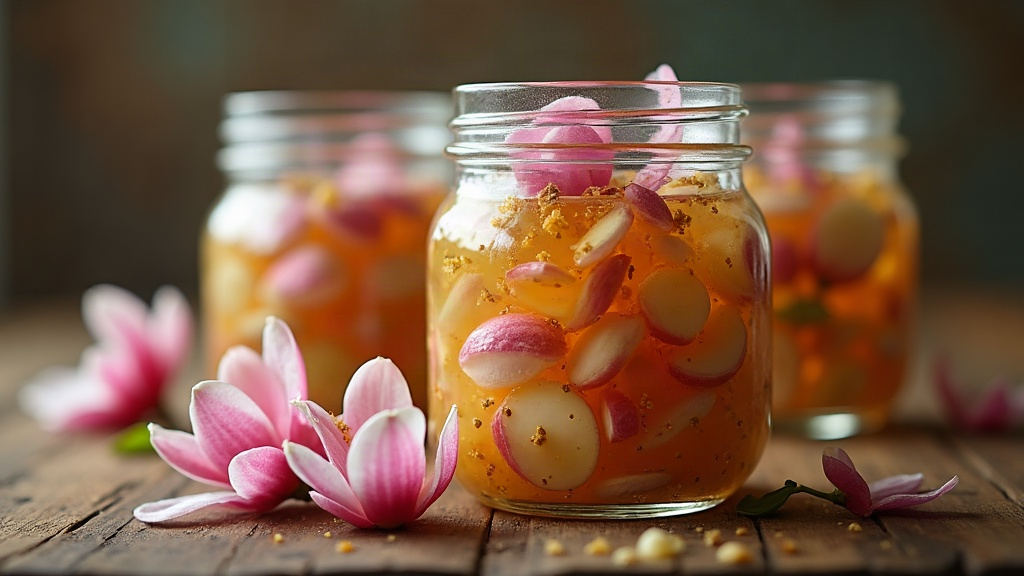
Lacto-fermenting spring magnolia petals into a ginger-spiced pickled condiment turns one of the season’s most fleeting blossoms into something you’ll actually reach for months later. Spoon it over rice, noodles, tacos, roasted vegetables, whatever needs a tangy, aromatic lift. This guide covers identifying edible magnolia, harvesting petals without wrecking the tree, building a simple brine culture, and troubleshooting the ferment so it comes out crisp, floral, and safe to eat.
Why Ferment Magnolia Petals?
On their own, magnolia petals taste peppery, a little citrusy, almost like ginger already. That’s exactly why real ginger works so well alongside them in a lacto-fermented pickle. Fermentation does three things a bowl of fresh petals simply can’t:
- Stretches a two-week bloom window into a condiment that keeps for months in the fridge.
- Softens the bitterness in the outer petals while pulling the floral notes forward.
- Adds probiotic tang. The lactic acid bacteria (mostly Lactobacillus species) already living on the petal surface eat the sugars and produce lactic acid, giving you that sour, pickle-like bite with zero vinegar involved.
Which Magnolias Are Edible?
Not every magnolia species ends up on a plate, but a handful of common ornamental varieties are safe and have a long history in East Asian kitchens:
- Magnolia denudata (Yulan magnolia): classic white blooms, mild peppery flavor.
- Magnolia liliiflora (Mulan/tulip magnolia): deep pink-purple petals, noticeably stronger taste.
- Magnolia x soulangeana (saucer magnolia): the tree most people actually have in their yard, pink-white petals, a solid all-purpose choice.
Skip anything from trees treated with pesticides, roadside trees choking on exhaust, or a tree you can’t identify with confidence. Not sure what you’re looking at? Check with a local foraging guide or your extension office before it goes anywhere near your mouth.
Harvesting Petals the Right Way
Timing beats technique here, every time.
- Pick petals just after the flower has fully opened but before the edges start browning. That’s usually a 3 to 5 day window per bloom, not much more.
- Harvest in the morning once the dew has dried, when petals are firm and haven’t been bruised by wind or handling.
- Take only a slice of the blooms from any one tree, roughly 20% or less, so it can still set seed and keep looking decent for the rest of the season.
- Rinse gently in cool water, pat dry, and toss anything with brown spots or insect damage. Don’t be sentimental about a few bad petals.
The Ginger-Spiced Brine Ferment
Ingredients
- 2 cups fresh magnolia petals, torn into bite-sized pieces
- 2-inch piece fresh ginger, thinly sliced or julienned
- 1 tbsp non-iodized sea salt (about 2-3% of total weight)
- 1 cup filtered, chlorine-free water
- Optional: 1 tsp whole coriander seed, a few thin slices of chili or lemon peel
Method
- Make the brine. Dissolve the salt completely in the water. Aim for 2-3% salinity: strong enough to keep mold at bay, gentle enough to let the lactic bacteria do their work.
- Pack the jar. Layer petals and ginger slices into a clean glass jar, pressing down gently so some juice releases and the air pockets disappear.
- Submerge everything. Pour brine over the petals until they’re fully covered. A small fermentation weight, a cabbage leaf, or a food-safe glass weight will hold things under the liquid line. Petals poking above the brine are basically an invitation for mold.
- Cover loosely. A fermentation lid or airlock works well, or just use a regular lid and “burp” it daily to let the CO2 out.
- Ferment at room temperature (65-75°F / 18-24°C) for 4 to 7 days. Start tasting on day 3, every day after that.
- Check for readiness. You want a pleasant sour tang, a bit of fizz, and petals that have softened without turning to mush. The brine going cloudy is a good sign, that’s fermentation doing its job. Pink, fuzzy, or foul-smelling is not a good sign, ever.
- Refrigerate. Once it tastes the way you want, move the jar to the fridge to slow things down. It’ll hold up well for 2 to 3 months.
Serving Ideas
- Spoon over congee, fried rice, or ramen for a floral-sour kick.
- Fold into a quick slaw with cabbage and carrots.
- Use as a taco topping alongside pickled onions.
- Blend a few tablespoons into a vinaigrette for extra depth.
Troubleshooting Common Issues
- White film on top: usually harmless kahm yeast, just skim it off. If it’s fuzzy and colored (green, black, pink), the batch is done, throw it out.
- Too salty: cut back on salt next time, or rinse the petals briefly right before serving.
- Not sour enough: give it another day or two, or move the jar somewhere a touch warmer.
- Mushy texture: shorten the fermentation window next round, or start with firmer, freshly picked petals.
Conclusion
Lacto-fermenting magnolia petals with ginger is a small, low-effort project that locks a fragile spring bloom into a jar that keeps paying off for months. Get the species right, mix a simple salt brine, wait a few patient days, and you end up with something genuinely useful in the kitchen: floral, peppery, tangy, and nothing like what you’d find on a store shelf.