Why Your Jun Tea SCOBY Sinks: Raw Honey's Impact on Buoyancy
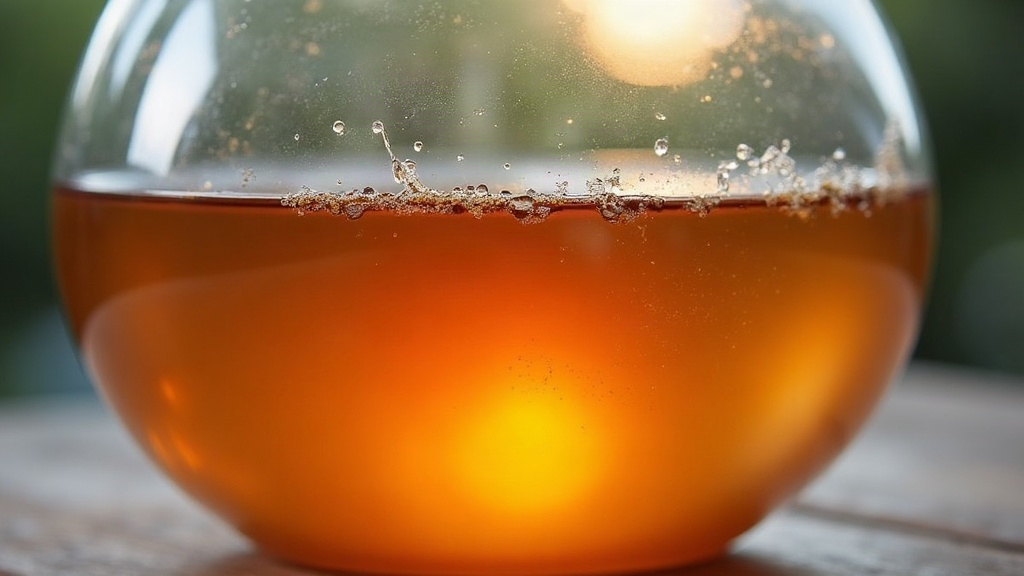
If your Jun SCOBY is parked at the bottom of the jar instead of bobbing near the top, take a breath. A sinking SCOBY during the first ferment is incredibly common, and most of the time it has nothing to do with failure. Usually it just means the culture hasn’t built up enough carbon dioxide yet, the raw honey hasn’t fully dissolved or started feeding the microbes, or the SCOBY is new, thin, or freshly cut from a larger mother. Give it some patience and a tweak to your honey ratio, and it’ll usually sort itself out.
Why SCOBYs Sink in the First Place
A healthy, actively fermenting SCOBY floats thanks to carbon dioxide bubbles trapped in its cellulose layers. When it sinks, that just means fermentation hasn’t produced enough gas to lift it yet. It doesn’t mean the culture is dead, and it definitely doesn’t mean it’s contaminated.
Common culprits:
- New or baby SCOBYs are thinner and denser, so they sink naturally until they grow a fresh layer.
- Cold brewing spots (below 68°F/20°C) slow down bacterial and yeast activity, which delays gas production.
- Freshly added raw honey hasn’t been metabolized yet, so sugar conversion, and the CO2 that comes with it, hasn’t picked up speed.
- Too little SCOBY relative to liquid means there’s not enough active culture to generate buoyant gas pockets quickly.
How Raw Honey Affects Buoyancy
Jun relies on raw, unpasteurized honey instead of sugar, and that choice shapes a lot of how your SCOBY behaves during fermentation.
1. Raw honey feeds different microbial activity
Raw honey carries trace wild yeasts, enzymes, and bits of pollen that pasteurized honey or plain sugar simply don’t have. These microorganisms can kickstart fermentation faster in some batches, triggering gas (and buoyancy) earlier than expected. But it’s inconsistent. Every jar of raw honey has its own microbial fingerprint, so results vary from batch to batch.
2. Too much or too little honey changes gas production
- Too little honey starves the culture. CO2 production slows down, and the SCOBY stays sunk longer than you’d like.
- Too much honey thickens the liquid into something syrupy and dense, making it physically harder for the SCOBY to rise even when fermentation is humming along underneath.
The standard ratio is roughly 1/4 cup raw honey per quart of water brewed with green tea. Stray too far from that, and you’ve probably found the reason your SCOBY refuses to budge.
3. Honey crystals and density pockets
Raw honey doesn’t always dissolve evenly, especially when it’s cold or thick (think crystallized wildflower honey straight from the fridge). Undissolved honey tends to settle at the bottom of the jar, creating a denser pocket of liquid that can temporarily pin the SCOBY underneath.
Is a Sunken SCOBY Normal During First Ferment?
Yes, especially within the first 24 to 48 hours. Plenty of Jun brewers watch their SCOBY sit completely submerged for the first one to three days before it slowly rises as fermentation kicks in. A floating SCOBY is a good sign of activity, sure, but a sunken one isn’t automatically a bad one.
When to worry instead
Only start worrying if you notice:
- Fuzzy, colored mold (black, green, or orange, not to be confused with the normal brown yeast strands that often form)
- A foul, rotten smell instead of the tangy, slightly sweet aroma you’d expect
- Zero activity (no bubbles, no change in smell) after 5 to 7 days at room temperature
How to Help Your SCOBY Float Again
- Stir the honey thoroughly before adding the SCOBY so no undissolved pockets linger at the bottom.
- Warm up your brewing spot. Aim for 70 to 75°F (21 to 24°C) for faster, steadier fermentation.
- Stick to a consistent honey ratio. Don’t eyeball it. Measure out 1/4 cup per quart every time.
- Be patient with new SCOBYs. A baby SCOBY peeled off a hotel can take several batches before it floats reliably.
- Leave the jar alone. Moving or jostling it too often disrupts the gas pockets trying to form.
Conclusion
A sinking Jun SCOBY during the first ferment is almost always a normal, passing phase, not a warning sign. Raw honey plays a big role here: its wild yeasts, thickness, and how quickly it dissolves all affect how fast carbon dioxide builds up and lifts the culture to the surface. Keep your honey ratio consistent, keep the brewing spot warm, and give new SCOBYs the time they need to mature. Do that, and you’ll typically see your SCOBY floating within a few batches.