Converting a Kombucha SCOBY to Jun: Black Tea to Honey Guide
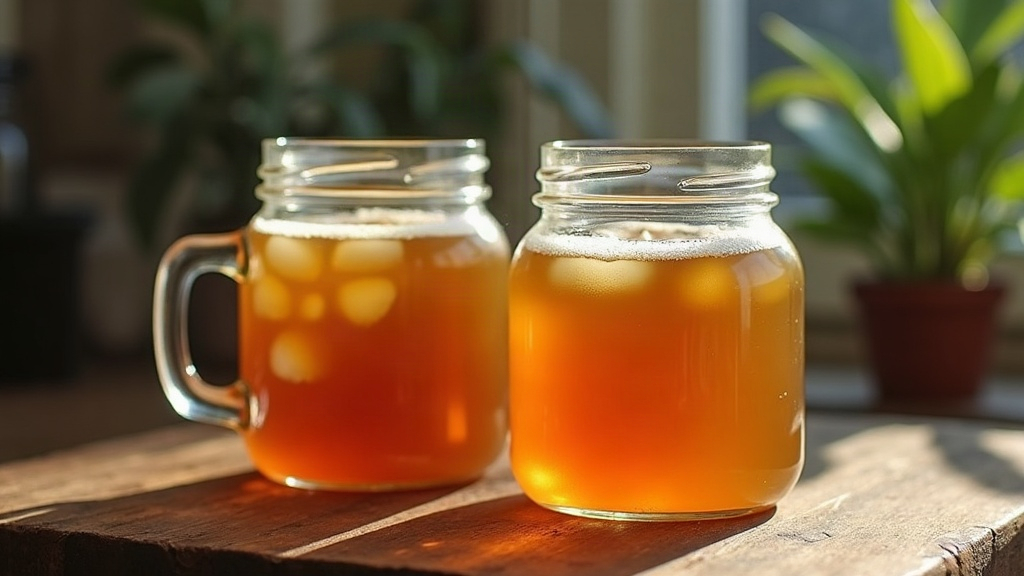
Yes, you can turn a regular black tea kombucha SCOBY into a Jun culture using green tea and raw honey. But there’s a catch: you can’t just swap the ingredients overnight and expect it to work. Jun’s yeast and bacteria have gotten used to a particular diet, sucrose from black tea, and they need time to adjust to honey’s fructose-glucose mix and the milder tannins in green tea. Rush it, and you risk shocking the culture, or worse, killing it off entirely. Here’s how to make the switch without losing your SCOBY in the process.
What Makes Jun Different From Kombucha
People love calling Jun “the champagne of kombucha,” which sounds nice but slightly undersells how different the process actually is:
- Tea base: Green tea instead of black tea
- Sweetener: Raw, unpasteurized honey instead of white cane sugar
- Fermentation speed: Faster, typically 2-5 days versus kombucha’s 7-14 days
- Flavor profile: Lighter, more effervescent, subtly floral or honeyed
- Ideal temperature: Slightly cooler, around 68-72°F (20-22°C)
Both cultures rely on the same basic idea, a symbiotic colony of bacteria and yeast (SCOBY) doing the fermentation work. But the yeast strains that flourish on honey’s simple sugars aren’t identical to the ones that prefer sucrose from black tea. It’s a subtle difference, but it’s exactly why the transition has to be gradual.
Can You Really Convert One Into the Other?
Plenty of home brewers have done this successfully, retraining a kombucha SCOBY into a Jun-producing one over the course of several batches. The organisms genuinely adapt to a new food source, though it doesn’t happen in a single feeding. Picture it more like weaning a pet onto a new brand of food, a little mixed in at first, then more, until the old stuff disappears entirely.
Now, some Jun purists will tell you a “true” Jun SCOBY carries its own unique microbial fingerprint that you can never fully copy this way. Maybe there’s something to that on a scientific level. But in practice? A converted culture turns out very good, genuinely authentic-tasting Jun within just a few cycles. Good enough that most people can’t tell the difference in the cup.
Step-by-Step Conversion Process
Step 1: Prepare a Transitional Batch
Start with a 50/50 blend to ease the shift:
- 4 cups green tea (cooled to room temperature)
- 4 cups black tea (cooled to room temperature)
- 1/4 cup raw honey
- 1/4 cup white sugar
- Your existing kombucha SCOBY plus 1-2 cups of its starter liquid
Ferment as usual, covered with a breathable cloth, for 7-10 days.
Step 2: Shift the Ratio Further
Next batch, tilt things further toward green tea and honey:
- 6 cups green tea, 2 cups black tea
- 1/3 cup raw honey, 2 tablespoons sugar
Pay attention to the new pellicle growing on top. A thinner, paler layer than your original kombucha SCOBY is actually a good sign, it means the culture is adapting.
Step 3: Go Fully Green Tea and Honey
By batch three or four, drop the black tea and sugar completely:
- 8 cups green tea, cooled
- 1/2 cup raw honey
- SCOBY plus starter liquid from the previous transitional batch
Keep it a touch cooler than you would for kombucha, and check on it daily. Jun moves fast, sometimes it’s done in as little as 48 hours depending on your kitchen’s temperature.
Step 4: Monitor and Adjust
- Fermentation stalling out, or mold showing up? Back off and run another transition batch with a bit of sugar mixed back in.
- A thin, cream-colored pellicle forming on top is exactly what you want to see, it means the culture has settled in.
- Don’t be surprised if the new SCOBY looks nothing like the old one. Thinner, paler, sometimes almost translucent, that’s normal for Jun.
Common Mistakes to Avoid
- Using pasteurized honey: Skip it. Store-bought pasteurized honey has been stripped of the wild yeasts and enzymes that give Jun its distinct kick. Raw, unfiltered honey only.
- Switching too fast: Jump straight to 100% honey and you can literally starve out the yeast strains that were built for black tea sugars before they’ve had a chance to adapt.
- Skipping starter liquid: Never brew without it. That acidic starter liquid keeps the pH where it needs to be and keeps contamination at bay during the whole transition window.
- Ignoring temperature: Jun likes it a bit cooler than kombucha. Brew it too warm and you’ll end up with a batch that’s sour and vinegary way faster than expected.
How Long Does the Full Conversion Take?
Based on what most home brewers report, you’re looking at 3 to 5 batches for a stable transition, which works out to roughly 3-6 weeks depending on how long your fermentation cycles run. Once you’re past that point, just treat it like any other Jun culture: green tea and raw honey, every single batch, no exceptions. Do that consistently and it’ll keep churning out fresh, bubbly SCOBYs indefinitely.
Final Thoughts
Converting a black tea kombucha SCOBY into a Jun culture isn’t complicated, it just takes patience and a willingness to go slow. Shift your tea and sweetener ratios a little at a time, keep an eye on the pellicle and how fast things are fermenting, and don’t cheap out on the honey (raw only, always). Give it a handful of batches and you’ll end up with a genuinely thriving Jun culture, one that’s ready to pump out light, fizzy, honey-sweet tea batch after batch. No need to hunt down a brand-new SCOBY online or beg one off a friend.