Preventing Explosive Kombucha Geysers During Second Fermentation
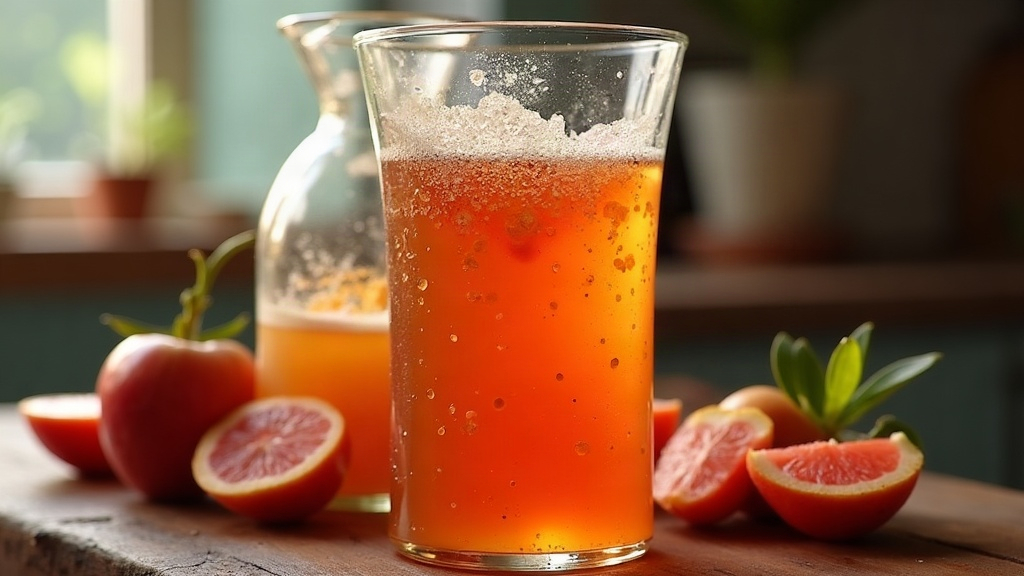
If you’ve ever cracked open a kombucha bottle and watched a foamy geyser shoot straight up and hit your kitchen ceiling, welcome to the club. It’s a rite of passage for home brewers. The culprit is usually fruit puree: it adds extra sugar and yeast nutrients that kick fermentation into overdrive, generating way more CO2 than a standard swing-top bottle can hold safely. The fix isn’t complicated, but it does require paying attention to a few things at once: how much sugar you’re adding, how long you let the bottles sit, what kind of bottle you’re using, and whether you’re “burping” them along the way. Let’s walk through each one.
Why Fruit Purees Cause Geysers More Than Juice or Syrup
Purees are the biggest troublemakers in second fermentation (F2). Tablespoon for tablespoon, they carry more fermentable material than a strained juice ever would.
- Higher pulp density: Puree contains skins, fiber, and pectin that trap CO2 bubbles. Open the cap and all that trapped gas releases at once, often violently.
- More sugar surface area: When fruit is blended, its sugars are far more exposed to yeast than they would be in a whole piece of fruit or even a strained juice. That means faster fermentation, plain and simple.
- Added pectin and starch: Bananas, mangoes, and stone fruits carry starches that yeast devours aggressively, sometimes doubling gas output compared to a berry puree of the same size.
- Temperature sensitivity: Puree ferments noticeably faster in a warm kitchen. A batch that sits safely at 68°F (20°C) can turn into a ticking bottle bomb at 78°F (26°C). Even a 10-degree swing matters here.
Mango, pineapple, and banana purees are notorious for building pressure fast and violently. Cucumber or unsweetened berry puree, by comparison, are practically tame.
How Much Puree Is Too Much?
A safe starting point is 1 to 2 tablespoons of puree per 16 oz (473 ml) bottle. Go much beyond that and you’re rolling the dice.
- Low-risk purees (raspberry, strawberry, unsweetened cranberry): up to 2 tablespoons per bottle is usually fine.
- Medium-risk purees (peach, apple, pear): stick to 1 to 1.5 tablespoons.
- High-risk purees (mango, pineapple, banana, tropical blends): 1 tablespoon or less, and keep an eye on it.
Scaling up to a full gallon batch? Don’t just multiply the ratio and call it a day. Start smaller than the math suggests, taste and check carbonation, then adjust upward on your next batch. It’s cheaper to learn this lesson with one flat bottle than with a countertop covered in kombucha.
Timing: The Most Overlooked Variable
Here’s the thing most people miss: it’s rarely the ingredient alone that causes the explosion. It’s leaving F2 running too long. Sugar-heavy purees can hit peak carbonation in 24 to 36 hours at room temperature, compared to 3 to 5 days for a plain sweetened tea batch.
- Start checking bottles daily from hour 12 onward if you’re using puree.
- The moment you press the bottle top and feel firm resistance, get it into the fridge. Waiting around for “perfect fizz” is exactly how people end up with kombucha on the ceiling. By the time it feels perfect, it’s usually already overshot.
- In summer or in a hot kitchen, cut your F2 window in half compared to what you’d do in winter.
Bottle Choice Matters More Than You Think
Not every container is built to hold pressure, and this is where a lot of people cut corners.
- Use thick-walled swing-top (Grolsch-style) bottles rated for carbonation. Thin, recycled juice bottles aren’t just prone to overflowing, they can actually shatter under pressure.
- Skip fully airtight mason jars for puree-heavy batches. They have no relief valve, so pressure just keeps building with nowhere to go.
- Leave 1 to 2 inches of headspace in every bottle. Gas needs somewhere to accumulate that isn’t liquid trying to escape the second you crack the seal.
The “Burping” Technique
Burping is simple: open the bottle just enough to let excess pressure hiss out, then reseal before any real volume of liquid escapes.
- Hold the bottle over a sink, tilted slightly away from your face (trust me on this one).
- Crack the seal until you hear that telltale hiss, then close it right back up.
- Do this once or twice a day during peak F2 for any puree batch.
Of all the tricks in this guide, this one habit alone prevents more explosions than anything else on the list.
What to Do If a Bottle Is Already Dangerously Fizzy
- Get it into the fridge right away. Cold slows yeast activity within a few hours, not instantly, but enough to help.
- Open it outdoors, or over a large basin, and angle it away from your body.
- Do not shake it. Do not carry it around. Just get it cold, then deal with it carefully.
Quick Troubleshooting Checklist
- Too much puree → cut back to 1 tablespoon per bottle next time.
- Kitchen too warm → move F2 somewhere cooler or shorten the fermentation window.
- Old, thin bottles → switch to heavy-duty swing-tops, no exceptions.
- Forgetting to burp → set a daily phone reminder. It sounds unnecessary until you forget once.
Conclusion
Nine times out of ten, an exploding kombucha bottle comes down to one of three things: too much sugar, too much time, or the wrong bottle. Keep your puree quantities in check, shorten F2 in warm weather, burp your bottles daily, and use bottles actually rated for carbonation. Do that, and you get fizzy, fruit-forward kombucha without turning your kitchen into a crime scene.